
Disclaimer: This article is intended to provide general guidance on paid career services. It does not explicitly endorse or oppose any specific business or organization.
Many PhDs and academics explore paid career services when transitioning beyond academia. These services can include career coaching, resume reviews, interview preparation, networking support, and job search strategy sessions.
For some people, these services can provide clarity, accountability, and confidence during a difficult transition. For others, they may not be necessary — or worth the cost.
This guide is designed to help PhDs make informed decisions about paid career services, understand potential benefits and drawbacks, and explore alternative ways to navigate a career pivot.
Should You Hire a PhD Career Coach?
In general, I personally lean toward saving your money first and investing time into informational interviews, networking, side projects, and skill-building before paying for career services. In many cases, talking directly with professionals already working in careers you’re interested in can provide more long-term value and clarity than expensive coaching programs.
That said, some PhDs genuinely benefit from paid career services — especially when they’ve done thorough research, understand exactly what they need help with, and feel confident in the provider they’re considering. If a service feels transparent, realistic, and aligned with your goals, it may be a worthwhile investment.
Why I Care About This Topic
I never personally used paid career services during my transition out of academia.
Instead, my own career pivot happened through informational interviews, side projects, networking, learning new skills, and talking to professionals already working in industries I was interested in. Over time, those conversations helped me better understand what I actually wanted to do — and what skills I needed to build to get there.
That experience shaped how I think about career transitions today.
In my opinion, the most important part of a successful career pivot is not necessarily paying for coaching. It’s developing clarity around what kind of work you want to do, building relationships with people already doing that work, and gaining practical experience and skills along the way.
That said, career services can still be valuable for many PhDs — especially when it comes to accountability, resume feedback, interview preparation, and translating academic experience into language employers understand.
The goal of this article is not to discourage people from using paid services. It’s to help academics approach them thoughtfully and realistically.
Why Many PhDs Explore Career Services
Many universities historically focused career advising on undergraduate students rather than graduate students or postdocs navigating specialized career transitions.
As a result, many academics seek outside guidance while exploring careers in industry, nonprofits, government, entrepreneurship, consulting, science communication, UX research, SEO, data analytics, and other fields beyond academia.
The growing demand for career transition support has led to a large ecosystem of career coaches, consultants, workshops, online communities, and educational resources specifically targeting PhDs and academics.
Some providers offer excellent support and genuinely helpful guidance. Others may overpromise outcomes or rely heavily on marketing tactics that create pressure or unrealistic expectations.
Types of Paid Career Services Options
Paid career services for academics can vary widely depending on the provider. Common offerings include:
- LinkedIn profile reviews
- Resume, CV, and cover letter reviews
- 1:1 career coaching or consulting
- Interview preparation
- Networking and job search strategy support
- Salary negotiation guidance
- Confidence or communication coaching
- Group workshops and cohort programs
- Video-based career development courses
Some providers are solo consultants, while others operate as larger businesses with teams of coaches and recruiters.
Pros and Cons of Paid Career Services
While paid career services were not used directly in the development of this career path, many academics have found value in these services – particularly in refining application materials, receiving targeted interview coaching, and learning how to effectively sell their academic background and skills to employers.
There are several pros and cons to consider when evaluating paid career services:
Cons:
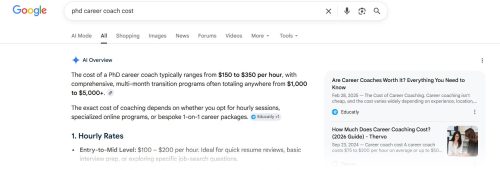
- Cost: Services can range from $100 for a single session to $5,000 or more for comprehensive programs.
- Contract Commitments: Some providers may encourage clients to enter long-term contracts.
- Specialization Gaps: Coaches may be more experienced in certain fields (e.g., STEM) and less familiar with others (e.g., humanities).
- Variable Outcomes: Effectiveness can vary depending on the provider, the client’s needs, and the quality of the service.
Pros:
- Personalized 1:1 consulting options
- More specific guidance from professionals (STEM, humanities, etc)
- Possible inclusion into a deeper network of professionals
- Another set of eyes to review professional documents
Overall, career services can be a valuable investment, particularly when working with a provider who offers tailored guidance and actionable feedback aligned with your specific goals and professional background.
How to Evaluate Career Service Providers
If you’re considering paid career services, take time to research providers carefully before making financial commitments.
A provider’s website and testimonials are only one part of the picture.
Additional ways to evaluate services include:
- Reading Google Reviews or BBB reviews
- Searching Reddit discussions and forums
- Looking for independent reviews outside their website
- Asking other PhDs on LinkedIn about their experiences
- Reviewing the provider’s actual career background
- Checking whether pricing is transparent
- Evaluating whether the provider specializes in your field or interests
You should also pay attention to how providers market themselves.
Strong career services typically focus on education, practical guidance, and realistic expectations — not fear-based marketing or guaranteed outcomes.
A Free Alternative: Informational Interviews
One of the most valuable free career transition strategies is conducting informational interviews.
Informational interviews are conversations with professionals working in careers or industries you want to learn more about. They can help you:
- Explore possible career paths
- Understand day-to-day work responsibilities
- Learn how industries operate
- Build professional relationships
- Discover skills employers value
- Gain confidence talking with professionals outside academia
For many PhDs, informational interviews provide more long-term value than immediately paying for coaching services because they create real-world understanding and authentic professional connections.
They were one of the most important parts of my own transition beyond academia.
The Goal of After Your PhD LLC
After Your PhD LLC does not currently provide paid career coaching services.
Instead, the goal of this platform is to help PhDs explore career paths beyond academia through practical resources, educational content, curated tools, and real transition stories from other academics.

Ryan Collins PhD is an SEO Strategist at Go Fish Digital. Ryan completed his PhD in Media Arts and Sciences at Indiana University Bloomington in 2021. During his time at Indiana University, Ryan eventually pivoted into a career in SEO and Digital Marketing after having informational interviews with working professionals in SEO, working on side projects, and gaining industry experience.