One of the most surprising parts of earning a PhD is realizing that self-doubt doesn’t disappear once you graduate. In many cases, it becomes even more noticeable.
Whether you’re starting your first industry job, interviewing for positions outside academia, or taking on more responsibility at work, it’s common to wonder whether you’re qualified enough or if someone will eventually discover you “don’t belong.” These thoughts are often described as impostor syndrome, and they’re incredibly common among graduate students, postdoctoral researchers, and early-career professionals.

Confidence has always been something I’ve struggled with personally. Even after earning a PhD and transitioning into industry (SEO/GEO), I still catch myself questioning whether I’m qualified enough or comparing myself to people with different backgrounds and experiences.
While no book can completely eliminate self-doubt, the right one can provide a new perspective, practical advice, or simply reassure you that you’re not alone. If you’re working through impostor syndrome or trying to build confidence after graduate school, I hope one of these recommendations resonates with you.
Disclosure: This article contains affiliate links. If you purchase a book through one of these links, After Your PhD may earn a small commission at no additional cost to you. Please email afteryourphd@gmail.com if you have any questions or concerns.
What Is Impostor Syndrome?
Impostor syndrome is the persistent belief that your accomplishments are due to luck rather than your own abilities. People experiencing impostor syndrome often worry that they’ll eventually be “found out,” despite years of education, experience, and evidence that they are capable.
For PhDs, these feelings can be especially common. Academia often rewards perfectionism, constant comparison, and setting incredibly high expectations for yourself. Those habits don’t simply disappear after graduation. In fact, transitioning into a new industry or career can amplify those feelings because you’re learning new skills and entering unfamiliar environments.
The encouraging news is that confidence isn’t something you’re born with—it’s something you develop over time. Many successful people still experience self-doubt, but they’ve learned not to let it stop them from moving forward.
1. The Secret Thoughts of Successful Women by Valerie Young
If there’s one book that has become synonymous with impostor syndrome, it’s this one. Valerie Young has spent decades researching why high-achieving people doubt themselves despite their accomplishments.
She introduces several “impostor types,” helping readers recognize the thinking patterns that often fuel self-doubt. Although the title references women, the lessons apply broadly to anyone who has ever questioned whether they’ve truly earned their success.
This is an excellent starting point if you’ve ever felt like your accomplishments were simply luck or timing.
2. Mindset: The New Psychology of Success by Carol S. Dweck
Carol Dweck’s research on growth mindset has influenced educators, business leaders, and professionals around the world.
One of the biggest contributors to impostor syndrome is believing that intelligence or talent is fixed. Dweck argues that success comes from learning, effort, and persistence rather than innate ability.
For PhDs entering industry, this shift in thinking can be incredibly valuable. Instead of expecting yourself to know everything on day one, you begin viewing every challenge as an opportunity to grow.
3. The Gifts of Imperfection by Brené Brown
Perfectionism and impostor syndrome often go hand in hand.
In this book, Brené Brown explores how vulnerability, authenticity, and self-compassion allow people to live more fulfilling lives. Rather than chasing impossible standards, she encourages readers to embrace progress over perfection.
Many academics spend years believing mistakes are something to avoid. Brown offers a refreshing perspective that mistakes are simply part of being human.
4. Feel the Fear and Do It Anyway by Susan Jeffers
Waiting until you feel confident before taking action can leave you stuck indefinitely.
Susan Jeffers argues that fear is a normal part of growth and that confidence develops through action—not before it.
Whether you’re applying for your first industry job, preparing for interviews, or considering a completely new career path, this book serves as a reminder that uncertainty doesn’t have to prevent you from moving forward.
5. Atomic Habits by James Clear
Although this book isn’t specifically about impostor syndrome, it offers an important lesson about confidence.
James Clear explains how lasting change comes from building small, consistent habits instead of relying on motivation. As you accumulate small successes, confidence naturally begins to grow.
If you’re rebuilding your professional identity after academia, this book provides a practical roadmap for making meaningful progress one step at a time.
6. Designing Your Life by Bill Burnett and Dave Evans
Career transitions rarely follow a straight line.
Written by two Stanford professors, this book introduces design thinking as a framework for building a fulfilling career. Instead of searching for the “perfect” path, readers learn to experiment, gather information, and iterate based on experience.
For academics leaving higher education, this mindset can relieve much of the pressure associated with making one life-defining career decision.
7. Daring Greatly by Brené Brown
In Daring Greatly, Brené Brown explores how vulnerability is actually one of our greatest strengths.
Many people experiencing impostor syndrome spend enormous amounts of energy trying to avoid failure or criticism. Brown challenges readers to embrace vulnerability as an essential part of leadership, creativity, and personal growth.
It’s a powerful reminder that courage isn’t the absence of fear—it’s acting despite it.
8. The Happiness Trap by Russ Harris
Based on Acceptance and Commitment Therapy (ACT), this book teaches readers how to respond differently to negative thoughts.
Rather than trying to eliminate self-doubt completely, Harris encourages readers to recognize difficult thoughts without allowing them to control their actions.
For anyone who constantly overthinks or questions their abilities, this book offers practical strategies for focusing on what truly matters.
9. The Confidence Code by Katty Kay and Claire Shipman
Why do capable people often feel less confident than they should?
Drawing on research from psychology and neuroscience, the authors explore why confidence doesn’t always match competence and what readers can do to bridge that gap.
The book emphasizes that confidence is built through experience and action rather than waiting until you feel completely prepared.
10. The Mountain Is You by Brianna Wiest
Sometimes the biggest obstacle isn’t a lack of ability—it’s ourselves.
Brianna Wiest explores self-sabotage, limiting beliefs, and emotional growth, encouraging readers to identify the internal habits that prevent them from reaching their goals.
For anyone navigating a significant life or career transition, this book offers thoughtful insights into personal development and resilience.
Final Thoughts
One lesson I’ve gradually learned is that confidence rarely comes first.
It’s easy to assume that successful people feel completely prepared before they apply for a new position, speak at a conference, or make a career change. In reality, many people still experience doubt—they’ve simply learned that confidence often grows after taking action, not before.
I still struggle with confidence from time to time, and I don’t expect those feelings to disappear completely. What has helped me most is hearing other people’s stories and realizing that even accomplished researchers, executives, entrepreneurs, and authors have questioned themselves along the way. Reading about their experiences has reminded me that self-doubt isn’t a sign that you don’t belong—it’s often a sign that you’re challenging yourself to grow.
If you’re experiencing impostor syndrome during graduate school or while transitioning into a new career, I hope one of these books provides encouragement, a fresh perspective, or practical tools to help you move forward.
Remember, earning a PhD already demonstrates something important: you’re capable of learning difficult things. Your next chapter is simply another opportunity to continue doing exactly that.
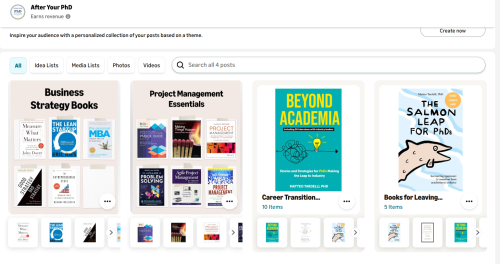
Explore More Book Recommendations on the Official Amazon Storefront
Looking for more books to support your personal and professional growth? Explore additional recommendations on the official After Your PhD Amazon Storefront, featuring books on career transitions, communication, productivity, leadership, and navigating life beyond academia.

Ryan Collins PhD is an SEO Strategist at Go Fish Digital. Ryan completed his PhD in Media Arts and Sciences at Indiana University Bloomington in 2021. During his time at Indiana University, Ryan eventually pivoted into a career in SEO and Digital Marketing after having informational interviews with working professionals in SEO, working on side projects, and gaining industry experience.